
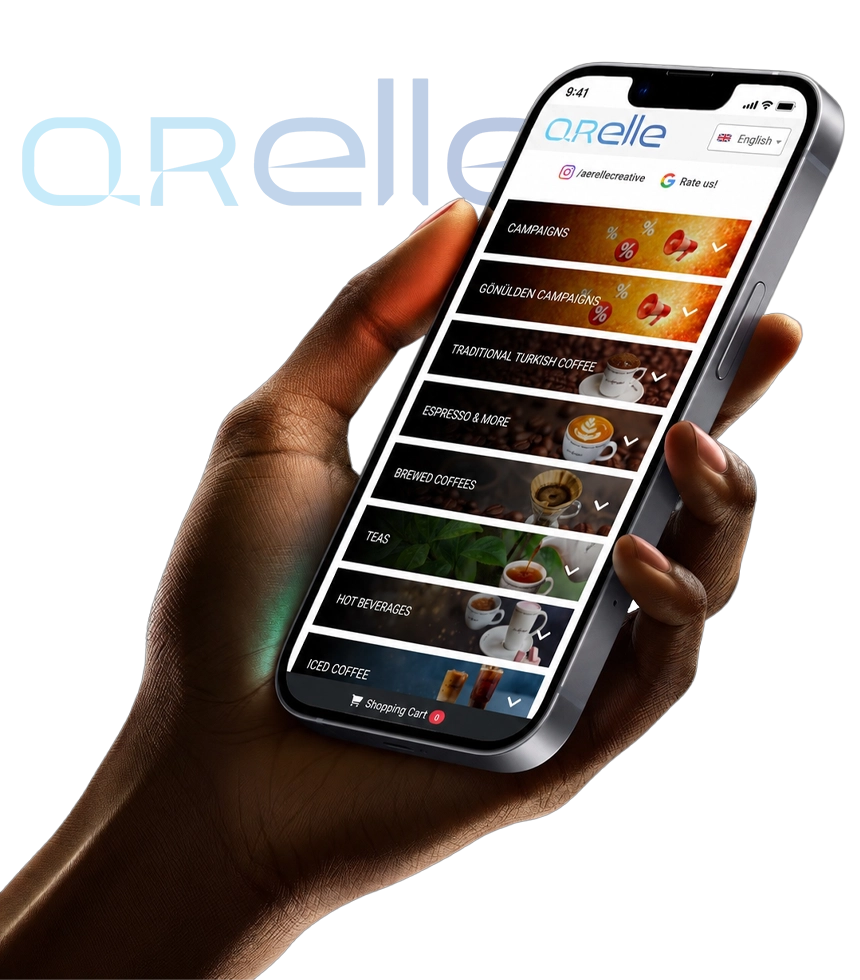
Over the past few years, traditional paper menus have gradually started to disappear from restaurants, cafés, hotels, and bars. QR menus have taken their place, making menu management easier for businesses while offering customers a faster and more convenient experience. But how does this system actually work, why has it become so popular, and how can a business create one from scratch? Let us take a closer look.
What Does a QR Menu Actually Do?
In simple terms, customers scan the small square code placed on the table, window, or entrance using their smartphone camera. The menu then opens directly in the phone’s web browser.
There is no need to download an application or install additional software. All the customer needs is a smartphone with a camera.
However, a well designed QR menu is much more than a photograph of a paper menu uploaded as a PDF. Categories, product descriptions, images, allergen details, and multiple language options can all be managed through a single control panel.
What Happens Behind the Scenes?
The way the system works is actually quite simple. First, the business transfers its menu into a digital platform and adds its products under relevant categories. Once this process is complete, a unique QR code is generated for the business.
This QR code can then be placed on tables, windows, printed menu covers, or at the entrance. When customers scan it with their phones, the digital menu opens immediately.
One of the biggest advantages is that the QR code does not need to be reprinted whenever something changes. If a product price is updated, a new dish is added, or a description is revised, the changes made in the management panel are instantly reflected in the live menu.
How Can You Create Your Own QR Menu?
The first step is to choose a digital menu system that suits the needs of your business. You can then add your business details, menu categories, and products to the management panel.
It is important to remember that entering only a product name and price is usually not enough. A short and appealing description, a high quality image, ingredient information, and allergen details can make the menu much more useful and persuasive.
Otherwise, the digital menu will not offer much more value than a traditional paper menu.
Categories should also be organised logically. Familiar sections such as breakfast, starters, main courses, desserts, hot drinks, and cold drinks help customers find what they are looking for without getting lost in the menu.
Once everything is ready, the system generates a QR code. This code can be printed on table stands, menu covers, stickers, posters, or entrance signs.
What Are the Benefits for Businesses?
The biggest advantage is the speed of updating the menu. With a paper menu, changing a price usually requires a new design and a new print run. With a QR menu, the same process takes only a few minutes.
Products that are temporarily out of stock can be hidden instantly. Promotional items can be highlighted, and new dishes can be added without waiting for printed materials.
Customers always see current information, which helps build trust and prevents misunderstandings. Printing costs are also significantly reduced, especially for businesses that frequently change prices, introduce seasonal products, or update their menus.
Visual presentation is another major advantage. High quality food and beverage images help customers decide whether a product matches their expectations before placing an order.
Why Is a Multilingual Menu So Important?
In areas with a high number of international visitors, language barriers can create serious difficulties for both customers and employees.
A multilingual QR menu allows customers to view the menu in their preferred language, whether that is English, German, French, Spanish, Arabic, or another supported language.
This reduces the workload of employees and helps prevent incorrect orders, misunderstandings, and unnecessary food waste. Translation quality is extremely important, so menu content should sound natural and clear in each language.
Important Points to Consider in Menu Design
A menu does not become effective simply because it works technically. It should load quickly, be easy to read on a smartphone screen, and allow customers to move between categories without difficulty.
Small text, excessive use of colours, and complicated page layouts can make the menu tiring to use. Images should be high quality, but they should also be optimised so that they do not slow down the page.
The colours, fonts, and overall style of the menu should also match the brand identity of the business. A consistent visual presentation creates a more professional and memorable customer experience.
A PDF Menu and a Real QR Menu Are Not the Same
Some businesses choose a simpler method and connect their QR code directly to a PDF file. Although this may seem practical at first, PDF menus are often difficult to use on mobile devices.
A real QR menu system offers a completely different experience. It is designed specifically for mobile screens, organised into categories, searchable, and instantly updateable through a management panel.
Who Can Use a QR Menu?
Restaurants, cafes, hotels, beach clubs, bakeries, bars, and almost every business that offers a menu can benefit from a QR menu system.
For a small single location cafe, it can simplify daily menu management. For a multi-location chain, central QR menu management can provide branch specific product, price, and category control. Hotels can also use QR menu software for hotels across restaurants, bars, lounges, and breakfast areas.
What Should You Look for When Choosing a QR Menu System?
Ease of use, mobile compatibility, multilingual support, and fast updating should be among the main priorities. The ability to add unlimited products and categories, use product images, display allergen information, and customise QR code designs are also important features.
In addition, the system should load quickly, operate on a reliable infrastructure, and be able to support new requirements as your business grows.
This is where Qrelle comes in. Qrelle is a QR menu solution that allows businesses to create and manage their digital menus easily while offering customers a modern and seamless menu experience. You can start creating a menu tailored to your business today and present your products in an organised, up to date, and multilingual format.